
before the garment.
cloth is where our design begins.
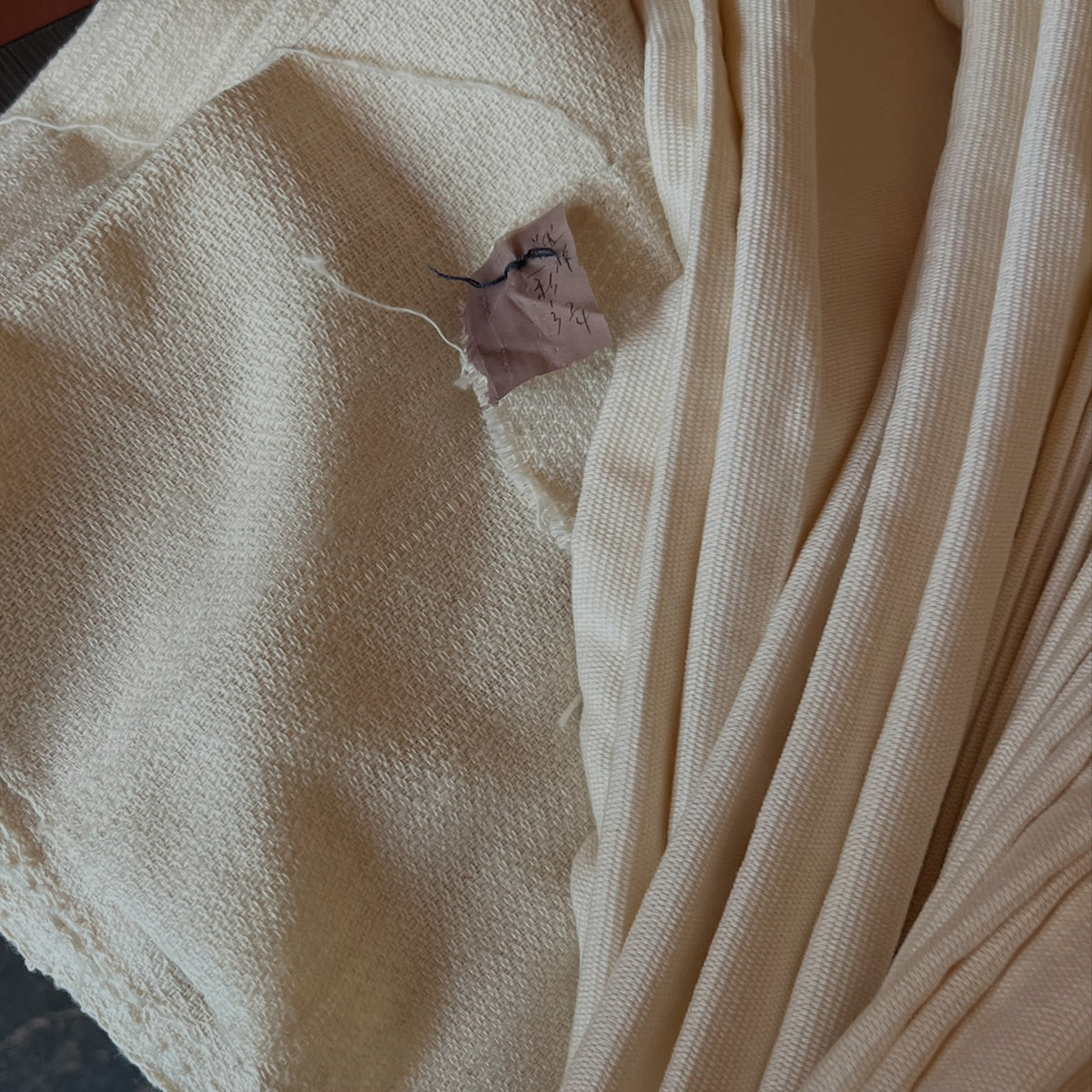
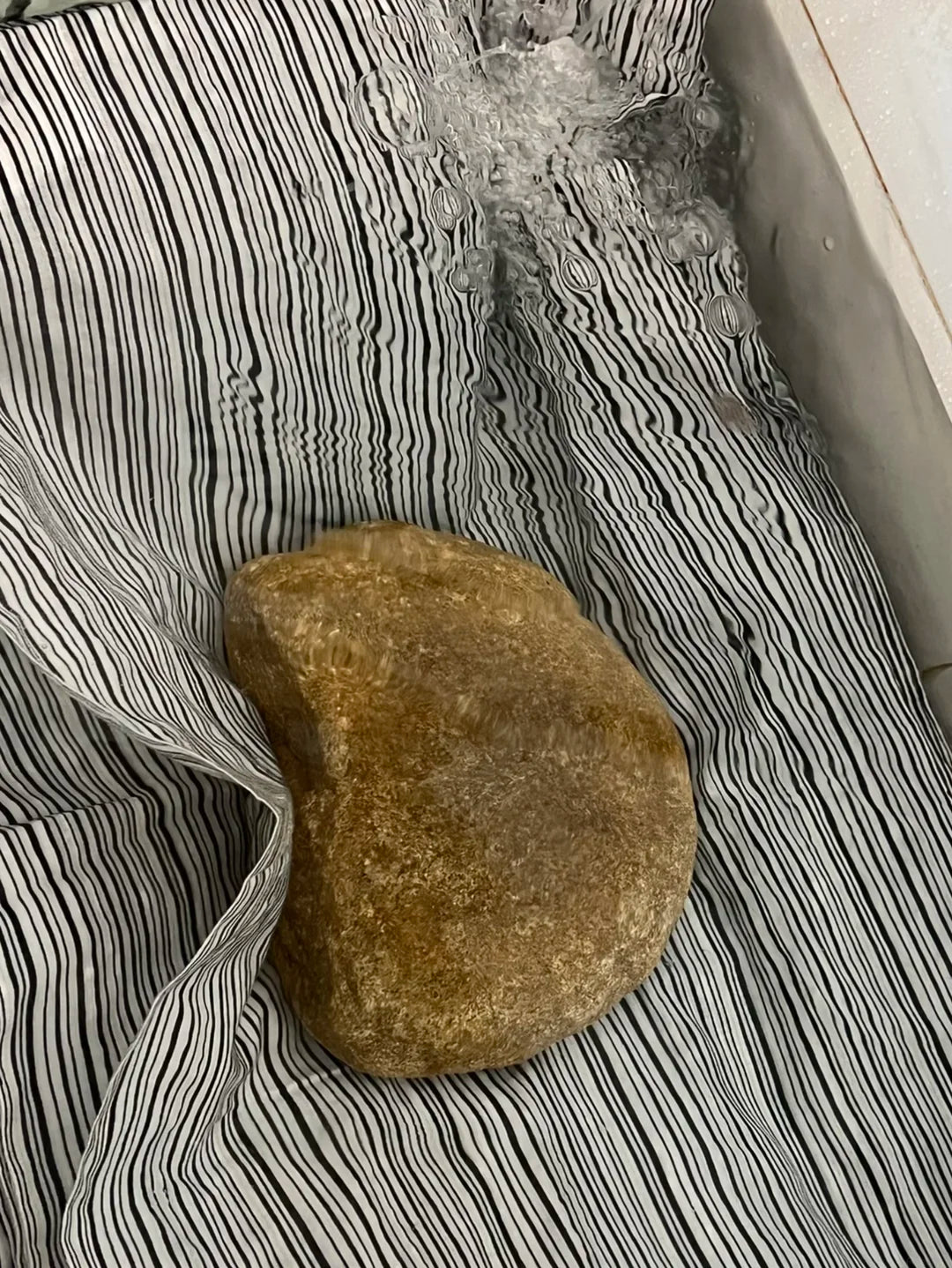
a weaver’s name on a roll of cloth. a stone holding fabric beneath running water. follow the hands and processes behind unisecon.
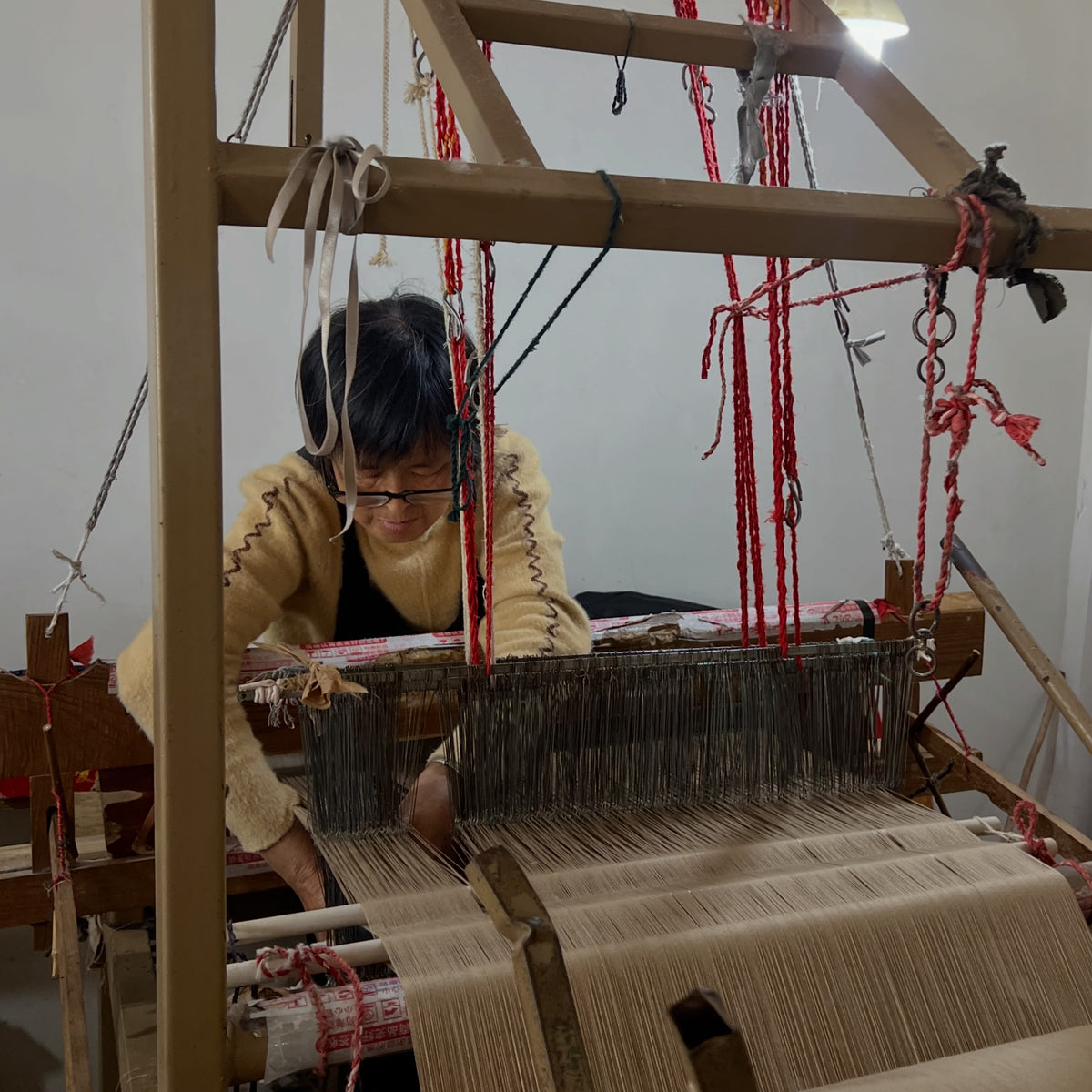
woven in hebei.
we work with a handweaving workshop in hebei, china. selected fabrics are woven on traditional looms; variations in yarn and tension remain visible in the cloth.
look closely at the yarn, the crossings, the small changes in the surface. a handwritten tag records the name of the weaver who made the roll.
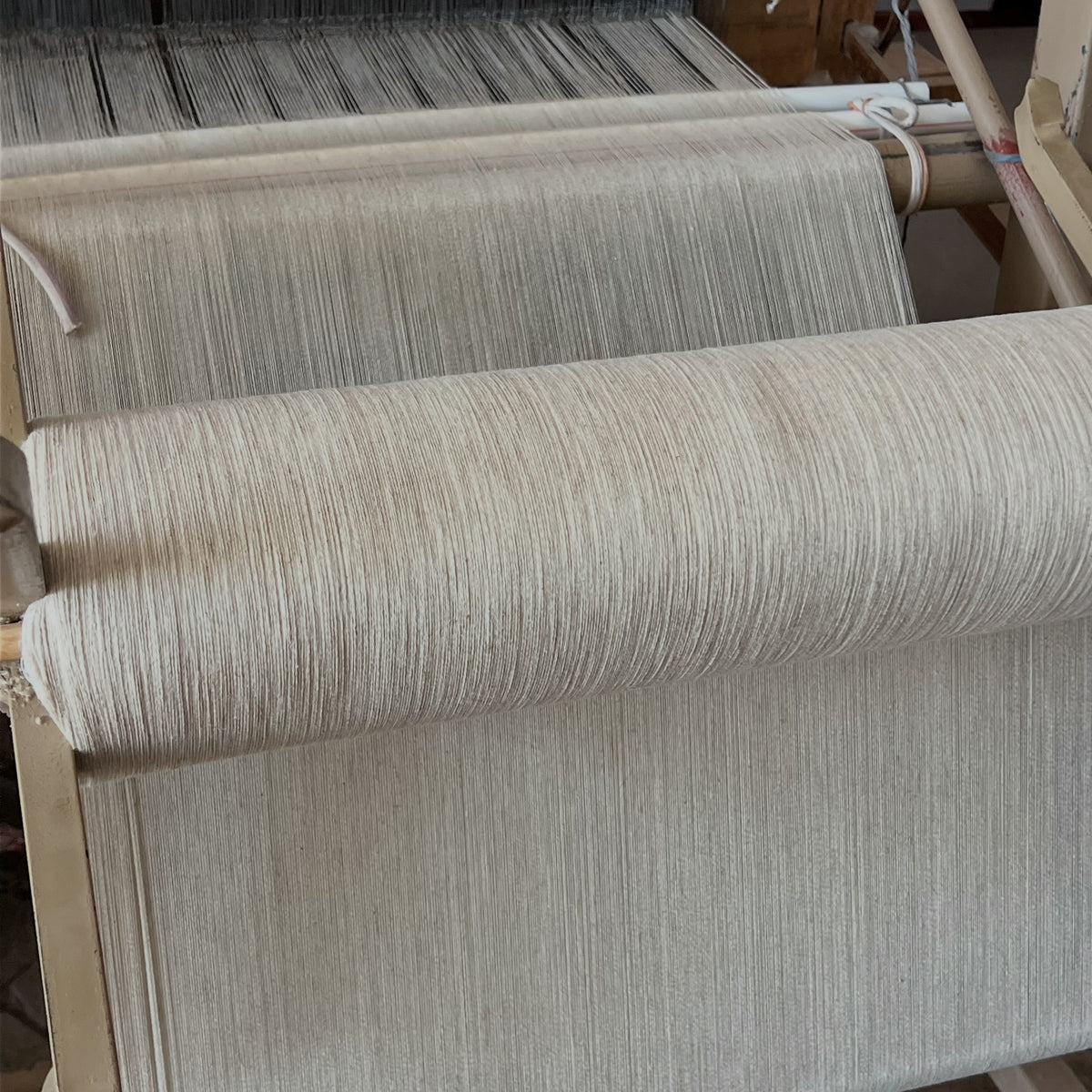
water, weight and time.
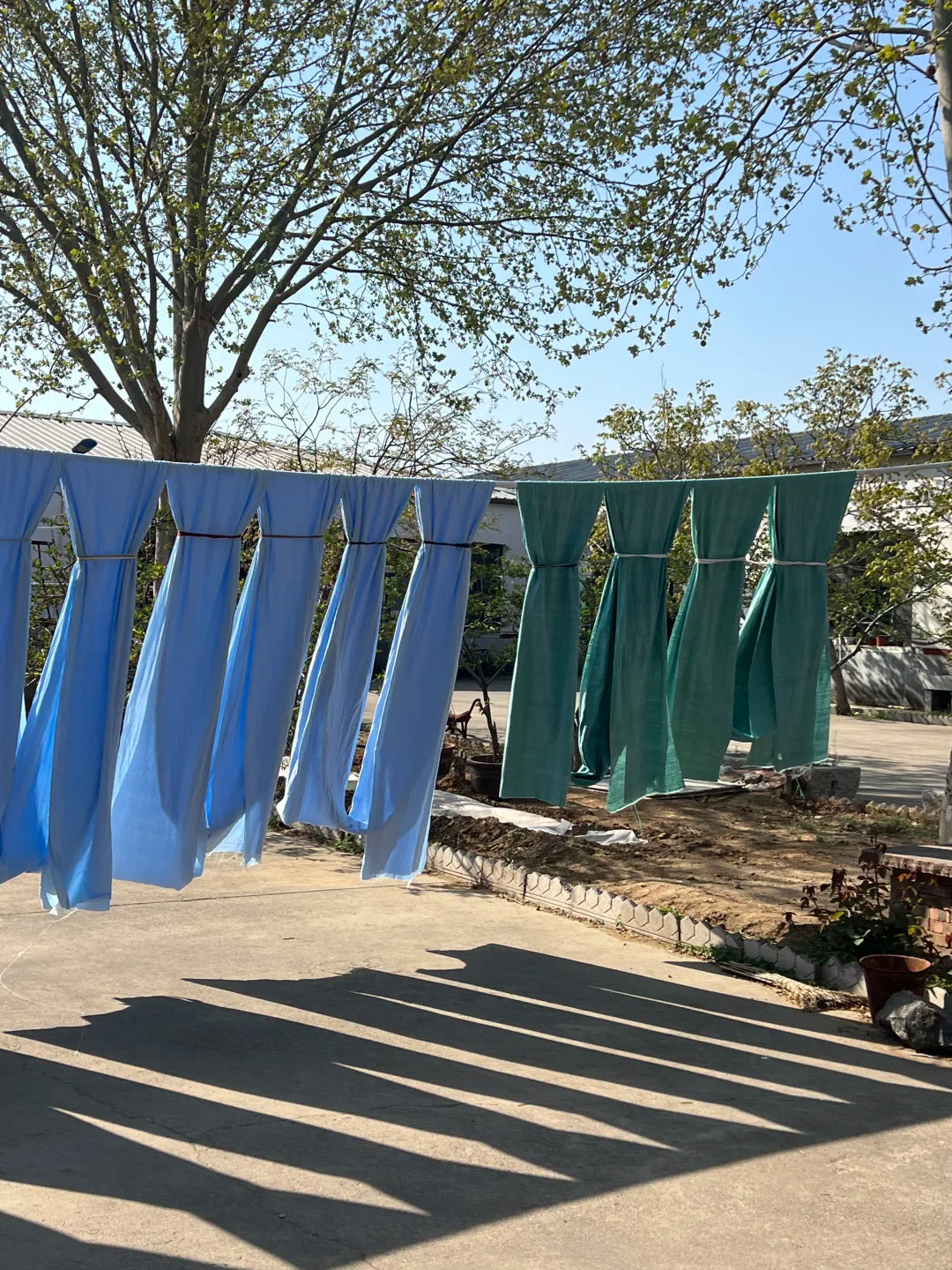
a stone holds cloth beneath flowing water. outside, blue and green lengths dry in the courtyard.
after weaving come washing, soaking and finishing. some pieces are held under running water to pre-shrink; others dry in the sun or indoors. different cloths take different paths.
a language of cloth.
handweaving is one part of our material language. across the collections, cloth is also cut and pieced, interlaced and folded. each process changes its structure, weight and movement.
handwoven cloth
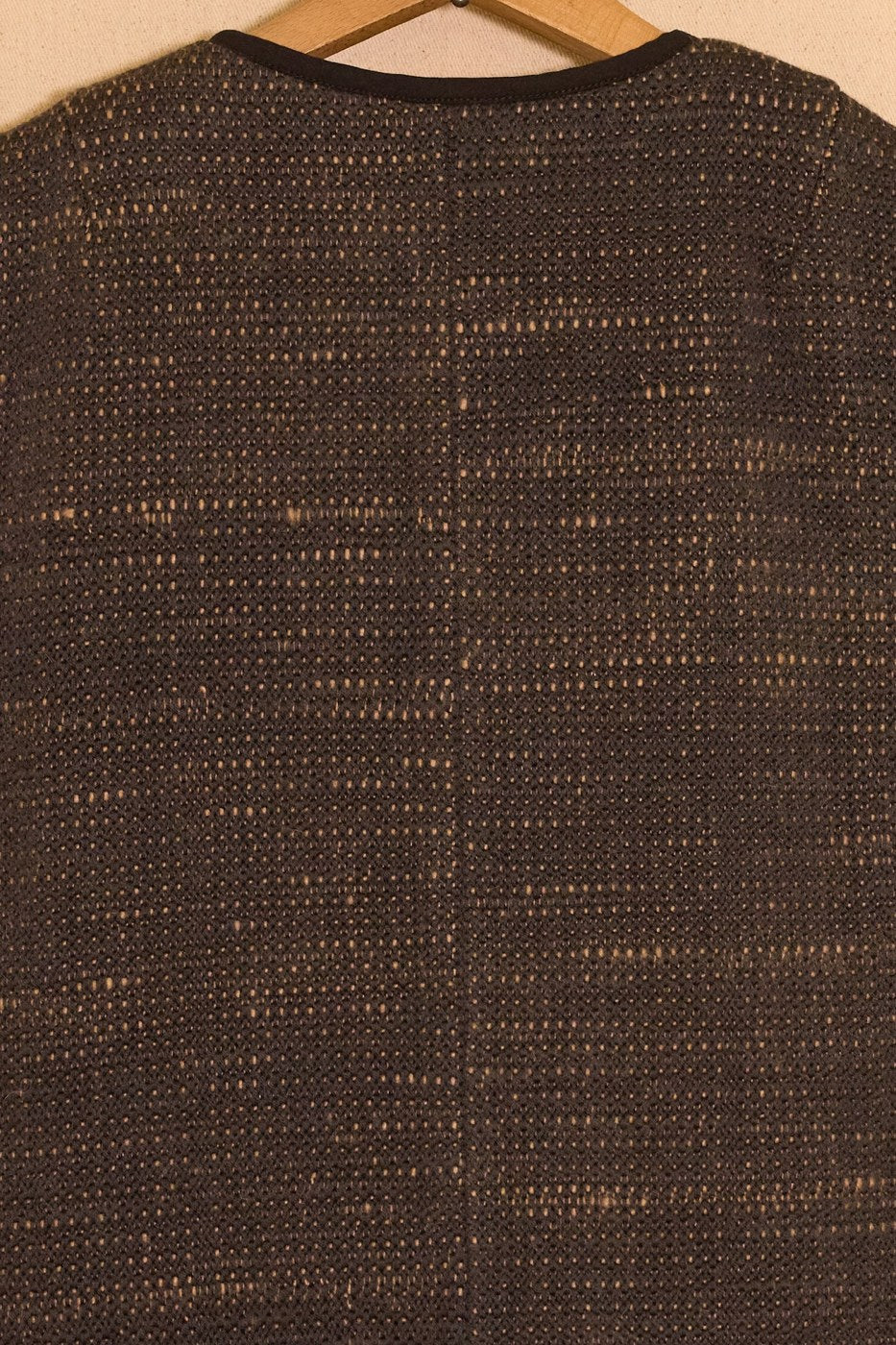
selected fabrics are woven on traditional looms in hebei. some begin with hand-spun cotton and natural dyes. the character of the yarn remains part of the finished surface.
patchwork
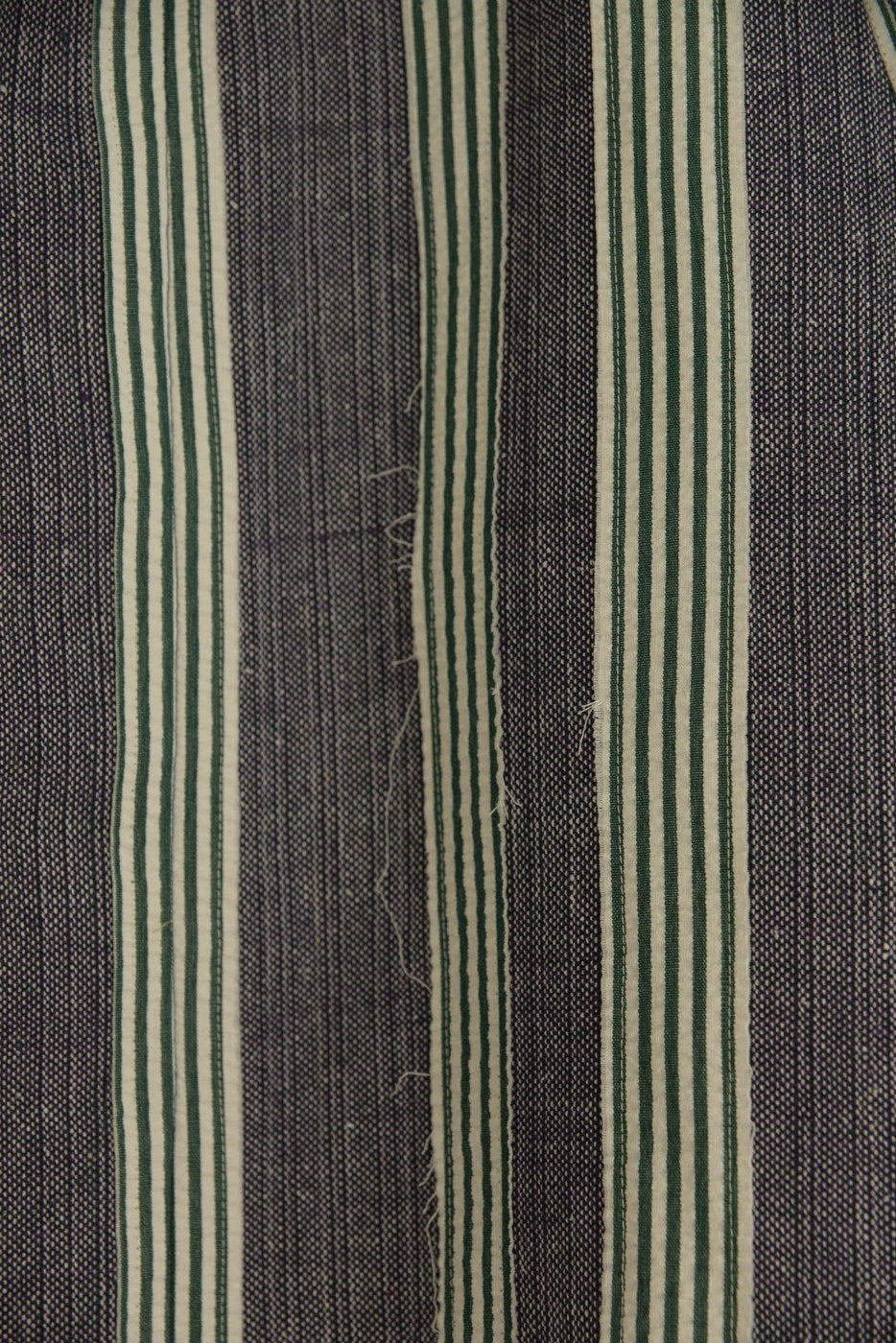
drawing on the chinese tradition of baijia yi, cloth is cut into strips and pieces of different widths, rearranged and joined into a new fabric before the garment is cut.
interlacing cloth
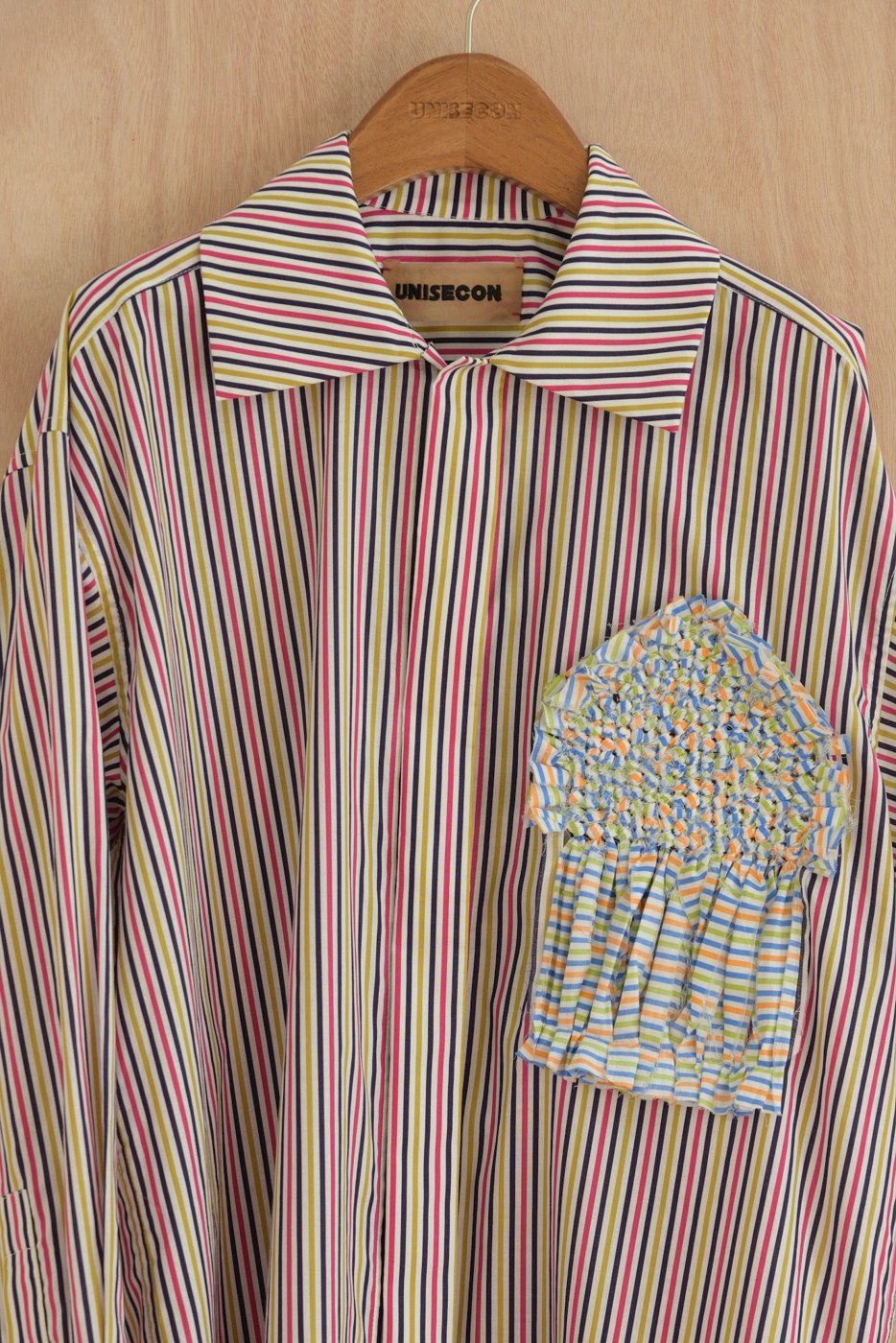
inspired by chinese bamboo weaving, we cut cloth into strips, prepare their edges, then interlace or knot them. changes in direction and tension give the fabric a different density and volume.

pleating
folds are arranged and fixed by hand, one at a time. their width, number and placement shape the garment's volume and the way it falls and moves.
from cloth to clothing.
a surface becomes a silhouette. its weight informs the cut; its structure shapes the volume; its texture changes how light moves across the clothes.
this is the connection between the making and the piece you wear. explore individual designs for their materials, construction, measurements and availability.
explore the collectionask us about materials or fitabout unisecon
unisecon was founded in new york in 2018 by designer nina shuyi jiang.
becoming a mother and beginning the label in the same year brought nina back to the making she knew as a child: working with her hands, arranging materials and finding possibilities through repetition. this attention to everyday gestures continues to shape the collections.
nina studied fashion design at parsons in new york and pattern cutting at central saint martins in london. her early work at boris bidjan saberi sharpened an interest in how construction and material shape the space around the body.